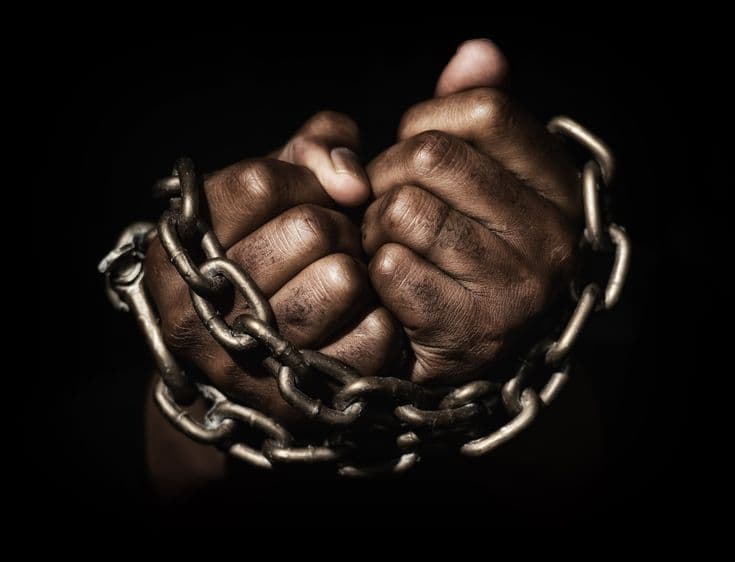
This was the unexpected question posed by one of my female students during class. I was taken aback—not by the question itself, but by its intensity and the fact that it came from an advanced student of knowledge. I realised then that her concern didn’t stem from Islamic teachings, but from a growing societal narrative shaped by cultural influences, the frustrations of individuals who perceive imbalance, and often, a misrepresentation of Islamic values—especially through media that seeks to portray Islam as oppressive towards women.
It goes without saying that Islam does not consider women as slaves to their husbands, nor does it place them in a position of servitude. Rather, Islam advocates for a balanced and harmonious family structure, where both husband and wife have distinct but equally valuable roles.
Consider this: men are religiously obligated to provide for their families. They care for their family’s financial, physical, and emotional needs. They work long hours, pay bills, and carry the burden of ensuring stability. Yet, we rarely hear men describe themselves as “slaves” because of these duties. They see it as their role—one they accept as part of the marital commitment.
Then why is it that, at times, a woman may feel burdened or even undervalued when fulfilling her role—especially if it involves homemaking, cooking, or nurturing children?
Often, it comes down to how we perceive roles and responsibilities. If one views their role as a meaningful contribution to a greater purpose, they feel fulfilled. But if it feels imposed, unappreciated, or unsupported, resentment can take root—even if the role itself carries value.
In any successful structure, whether it is a business, an organisation, or a family, individuals take on different roles. The survival and well-being of the unit depends on everyone doing their part. In a business partnership, for instance, different partners take on different tasks. One might handle finances while another oversees operations. If one partner suddenly refuses to do their share of the work, the entire business suffers. Similarly, in marriage, both spouses have distinct roles that contribute to the stability and well-being of their family.
Who defines these roles? Society at large, but ultimately it’s the couple. If the wife feels that she wants to earn and the husband feels he wants to be the homemaker then that may work for them, but the reality is that for most people it’s the other way round.
When roles are neglected, the balance is disrupted and the family unit begins to suffer. For instance, if neither partner prioritises homemaking and both focus solely on work and financial independence, emotional and practical detachment can creep in. Thoughts of “Why do I need him/her?” begin to surface, and even small disagreements become exaggerated points of tension—eventually leading to the breakdown of the relationship.
It’s like a business partnership where both partners are doing the exact same job. If one begins to think, “They come in at the same time as me, leave at the same time, and do exactly what I do—why am I even splitting the profits?” the partnership quickly loses meaning. For a partnership to succeed, each person must bring something the other cannot. The same applies to marriage: mutual contribution through complementary roles is key.
And if it doesn’t end in separation, this imbalance often leads to the neglect of a child’s upbringing. The house becomes less of a home and more of a temporary shelter—a hotel. The more organised partner ends up carrying the weight of both roles: earning an income and keeping the home in order. This strains the relationship and creates ongoing friction.
One might argue, “They can just share the responsibilities!” But when the husband does everything for himself and the wife does everything for herself, the essence of family is lost. A family isn’t built on parallel lives—it’s built on cooperation, shared sacrifice, and mutual support. Without that, resentment begins to take the place of love.
It is undeniable that in some cultures, women are expected to bear the brunt of household responsibilities without appreciation, while men avoid their share of duties. But this is a cultural problem—not an Islamic one. Islam promotes fairness and justice in marriage, with kindness, compassion, and mutual respect forming the foundation of the relationship.
Women are not slaves, nor are men their masters. Marriage in Islam is based on the concept of complementary roles—each spouse contributing according to their strengths, abilities, and mutual agreement. When these roles are embraced with understanding—not imposed—neither partner feels overburdened or undervalued. Instead, they feel honoured to contribute to a greater purpose: building a home rooted in love, trust, and the pleasure of Allah.
I pray that Allah grants you all balanced, peaceful, and fulfilling marriages—filled with mercy, understanding, and mutual respect. Amin.